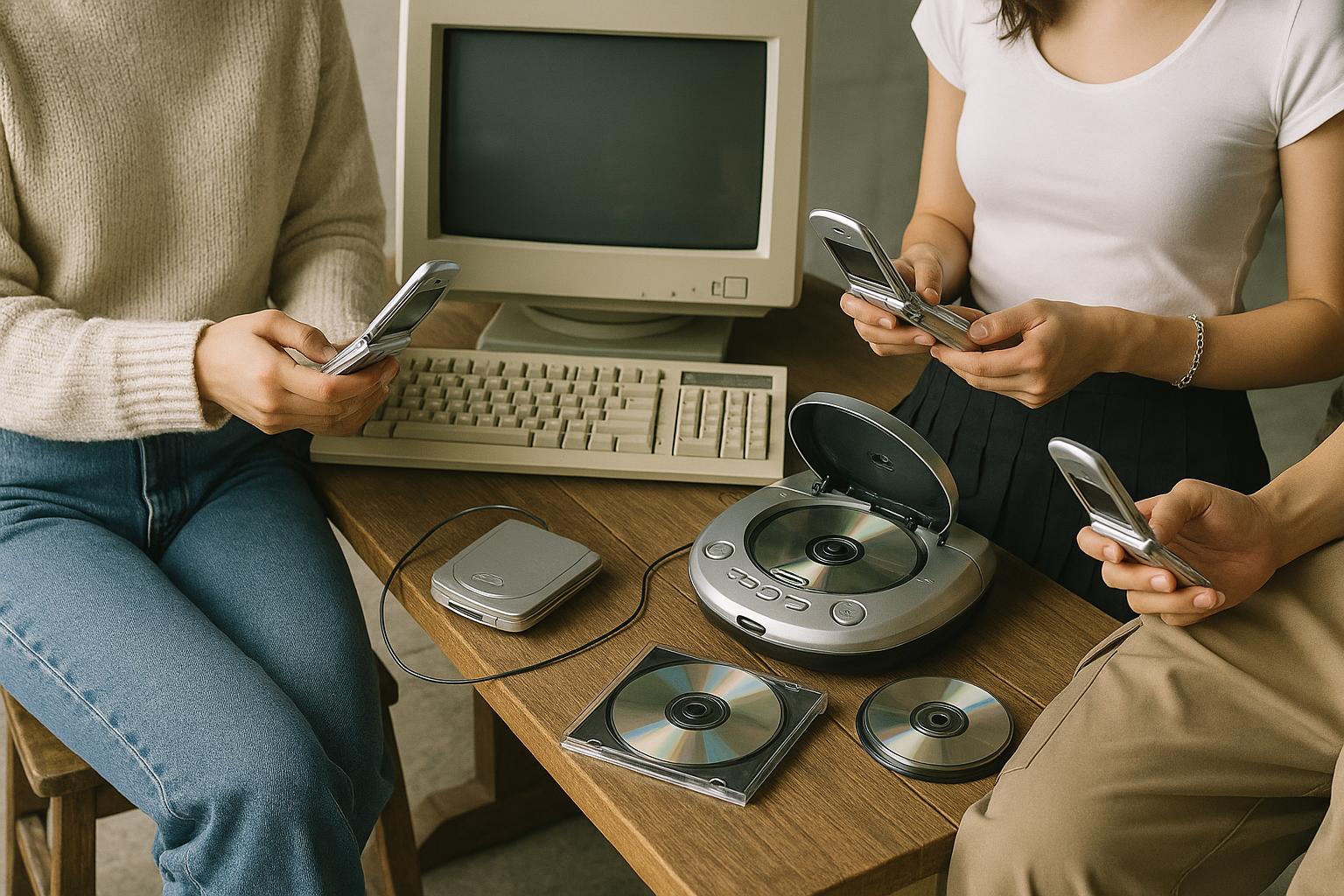
“Y2K aesthetics are so hot right now – and so is the era’s existential dread,” A. J. Willingham wrote on Stories From Tomorrow, describing the renewed fascination with the turn of the millennium. From Seoul billboards to TikTok feeds, that mix of sparkly optimism and quiet panic has found an unexpected home in Y2K K-pop. Yet behind the bunny beanies, low-rise jeans, and glossy music videos sits a specific story about technology, nostalgia, and pop.
At the original millennium, Y2K meant a feared computer glitch, not an outfit. Early programmers stored years with two digits, and people worried that when clocks rolled into 2000, banks, power grids and planes might fail overnight. Survival videos, novelty songs and TV movies cashed in on that anxiety. The catastrophe never came, but the feeling that technology could suddenly tilt life sideways stayed in the culture.
What Y2K really means in K-pop
In pop culture, Y2K shifted from scary bug to shorthand for the late 90s and early 2000s look. Fashion Chingu explains that “Y2K basically stands for “Year 2000.””, but the word now stretches to cover sparkling Y2K fashion like low-rise flares, baby tees, velour tracksuits, tiny shoulder bags and chunky platforms, plus a soundtrack of boy bands, R and B divas and blinged out hip hop that filled the radio between about 1998 and 2004.
South Korea had its own real time Y2K era. First and second generation idols like H.O.T, BoA, Shinhwa, TVXQ, Girls’ Generation, Wonder Girls, BIGBANG, Kara and SHINee folded Western R and B and hip hop into Korean pop, from bubblegum hits such as “Candy” to sleek tracks like “Replay” and “I’ll Be There”. Their music videos mixed sporty clubwear, metallic sets and early digital graphics, the same futuristic gloss now being mined again.
NewJeans and the stripped back Y2K pop revival
By the late 2010s, fourth generation K-pop had turned toward dark, hyper produced “girl crush” concepts, with groups like BLACKPINK and aespa leaning into noisy EDM drops and sci fi lore. NewJeans stepped in by doing almost the opposite. Songs such as “Attention”, “Hype Boy” and “Ditto” draw on early 2000s R and B grooves and easy listening melodies, sounding closer to Aaliyah or Destiny’s Child than to a battlefield anthem.
Visually, NewJeans doubled down on a casual Y2K schoolgirl look, pairing baggy jeans, crop tops, pastel hoodies and the bunny beanie with flip phones and bedroom style sets in their videos. Other artists pushed the trend in different directions. ITZY’s “Loco” and TAEYEON’s “Weekend” flirt with Juicy Couture tracksuits and old computers, XG leans into cyberpunk metallics, while TripleS, Red Velvet, iKON, Queenz Eye and Natty’s “Sugarcoat” recycle pleated minis, cargo pants and vinyl scratches.
Nostalgia, Black creativity and debates around Y2K K-pop
In the 2020s, Y2K’s comeback follows the usual 20 year cycle, landing just as Gen Z hit high school. During the 2020 lockdowns, TikTok exploded and a UK study found a surge in “positive nostalgic music,” with listeners turning back to upbeat songs from safer feeling times. Thrifting and Depop culture made real 2000s pieces affordable, so a Juicy hoodie or Ed Hardy tee became a prized score, not a joke.
Online, the Y2K tag was distilled into icons like Paris Hilton, Bratz dolls and hot pink flip phones, yet much of what people copy was built by Black women. As Bricks Magazine points out, “Trends such as the velour tracksuit and the iconic chainmail dress, integral to the modern Y2K aesthetic, were pioneered by Black women.” K-pop’s Y2K pop sound leans heavily on Black R and B and hip hop, so fans now push idols to credit those roots and avoid harmful styling like blackface or appropriated hairstyles.“Y2K aesthetics are so hot right now – and so is the era’s existential dread,” A. J. Willingham wrote on Stories From Tomorrow, describing the renewed fascination with the turn of the millennium. From Seoul billboards to TikTok feeds, that mix of sparkly optimism and quiet panic has found an unexpected home in Y2K K-pop. Yet behind the bunny beanies, low-rise jeans, and glossy music videos sits a specific story about technology, nostalgia, and pop.
At the original millennium, Y2K meant a feared computer glitch, not an outfit. Early programmers stored years with two digits, and people worried that when clocks rolled into 2000, banks, power grids and planes might fail overnight. Survival videos, novelty songs and TV movies cashed in on that anxiety. The catastrophe never came, but the feeling that technology could suddenly tilt life sideways stayed in the culture.
What Y2K really means in K-pop
In pop culture, Y2K shifted from scary bug to shorthand for the late 90s and early 2000s look. Fashion Chingu explains that “Y2K basically stands for “Year 2000.””, but the word now stretches to cover sparkling Y2K fashion like low-rise flares, baby tees, velour tracksuits, tiny shoulder bags and chunky platforms, plus a soundtrack of boy bands, R and B divas and blinged out hip hop that filled the radio between about 1998 and 2004.
South Korea had its own real time Y2K era. First and second generation idols like H.O.T, BoA, Shinhwa, TVXQ, Girls’ Generation, Wonder Girls, BIGBANG, Kara and SHINee folded Western R and B and hip hop into Korean pop, from bubblegum hits such as “Candy” to sleek tracks like “Replay” and “I’ll Be There”. Their music videos mixed sporty clubwear, metallic sets and early digital graphics, the same futuristic gloss now being mined again.
NewJeans and the stripped back Y2K pop revival
By the late 2010s, fourth generation K-pop had turned toward dark, hyper produced “girl crush” concepts, with groups like BLACKPINK and aespa leaning into noisy EDM drops and sci fi lore. NewJeans stepped in by doing almost the opposite. Songs such as “Attention”, “Hype Boy” and “Ditto” draw on early 2000s R and B grooves and easy listening melodies, sounding closer to Aaliyah or Destiny’s Child than to a battlefield anthem.
Visually, NewJeans doubled down on a casual Y2K schoolgirl look, pairing baggy jeans, crop tops, pastel hoodies and the bunny beanie with flip phones and bedroom style sets in their videos. Other artists pushed the trend in different directions. ITZY’s “Loco” and TAEYEON’s “Weekend” flirt with Juicy Couture tracksuits and old computers, XG leans into cyberpunk metallics, while TripleS, Red Velvet, iKON, Queenz Eye and Natty’s “Sugarcoat” recycle pleated minis, cargo pants and vinyl scratches.
Nostalgia, Black creativity and debates around Y2K K-pop
In the 2020s, Y2K’s comeback follows the usual 20 year cycle, landing just as Gen Z hit high school. During the 2020 lockdowns, TikTok exploded and a UK study found a surge in “positive nostalgic music,” with listeners turning back to upbeat songs from safer feeling times. Thrifting and Depop culture made real 2000s pieces affordable, so a Juicy hoodie or Ed Hardy tee became a prized score, not a joke.
Online, the Y2K tag was distilled into icons like Paris Hilton, Bratz dolls and hot pink flip phones, yet much of what people copy was built by Black women. As Bricks Magazine points out, “Trends such as the velour tracksuit and the iconic chainmail dress, integral to the modern Y2K aesthetic, were pioneered by Black women.” K-pop’s Y2K pop sound leans heavily on Black R and B and hip hop, so fans now push idols to credit those roots and avoid harmful styling like blackface or appropriated hairstyles.
Leave a Reply