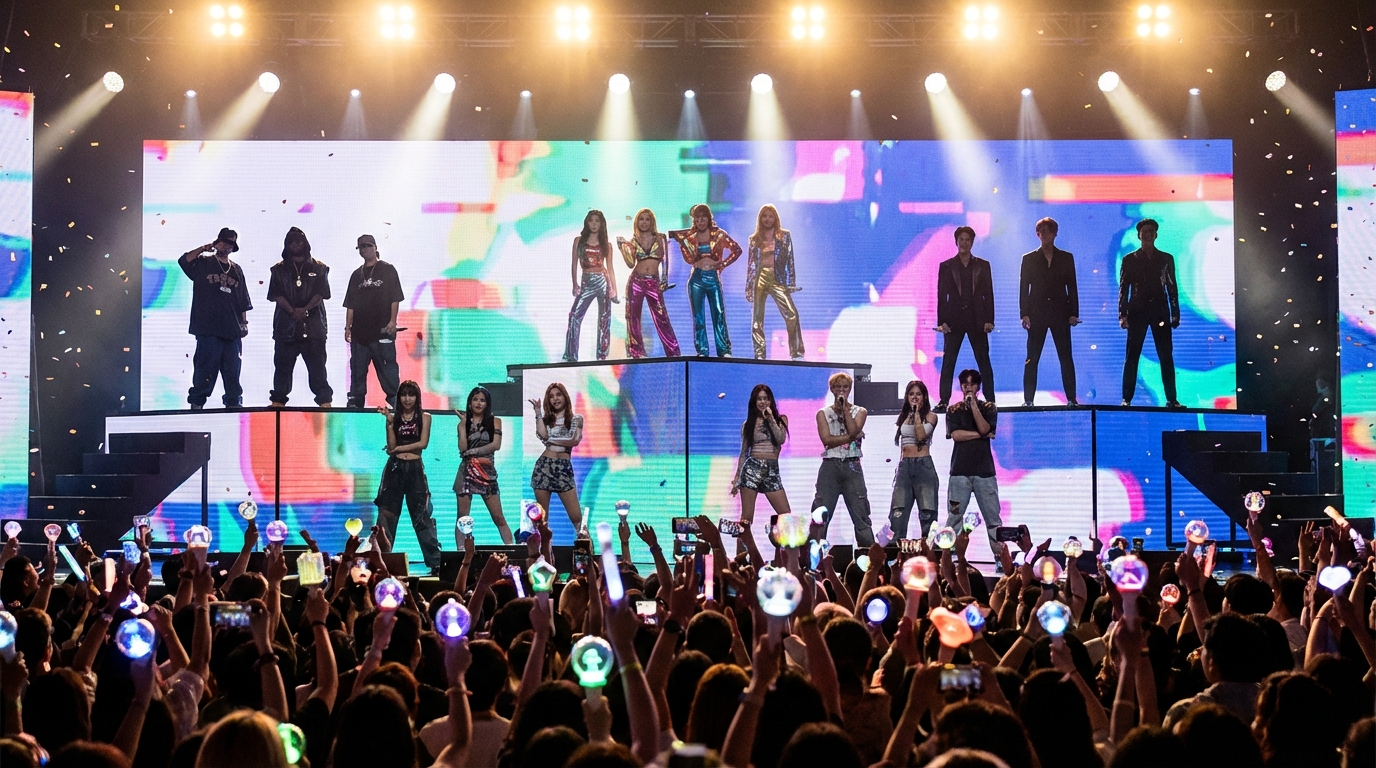
Ask ten K-pop fans to define “third gen” and you will likely receive ten distinct answers. Since the early 1990s, the South Korean music industry has evolved through specific waves, each bringing its own sound, fashion, and fandom culture. K-pop idol Viankha Jesslyn notes that these eras are “usually decided by fans and industry leaders” based on timing and trends.
“Sometimes they just go off of vibes because like, ‘Oh, this group has a similar vibe to third generation groups, so I guess I’ll consider them third,’” Jesslyn explained in an interview with wikiHow. These vibes have shifted from hip-hop experiments to the high-gloss, viral productions of today, creating a timeline that fans use to track the genre’s history.
From Pioneers to the Golden Age: 1st and 2nd Generations
The story begins with the first generation (early 90s–early 2000s):
Seo Taiji and Boys triggered the “big bang” of K-pop with “Nan Arayo (I Know)” literally creating the genre by introducing rap and hip-hop dance to Korean television.
Shortly after, H.O.T. established the “idol” archetype with “Candy,” a massive success defined by colorful outfits, sweet melodies, and giant plush gloves. Following them, S.E.S. set the standard for girl groups with the innocent R&B vibe of “I’m Your Girl.”
The second generation (mid-2000s–early 2010s) launched the Hallyu Wave regionally. TVXQ! delivered powerful vocals and sexy choreography in “Mirotic,” often cited as the ultimate male K-pop anthem. Meanwhile, Girls’ Generation (SNSD) released “Gee,” the viral mega-hit with addictive hooks and colored pants that dominated charts for months. “The second generation is the original Y2K [fashion]… more of like, ‘Ah, sparkles, ah, bold colors everywhere,’” Jesslyn remembers.
Global Explosion and Girl Crush: 3rd Generation
Social media propelled the third generation (mid-2010s) to worldwide fame. BTS reached the summit of the Billboard charts with “Dynamite”, a disco-pop tidal wave that cemented their global superstar status.
On the other side of the spectrum, BLACKPINK took the “Girl Crush” concept to its peak with “DDU-DU DDU-DU”, featuring heavy bass and their iconic gun choreography. Jesslyn describes this style as music “with punchy lyrics and short hooks and repeating words.” TWICE also defined the era with their “Color Pop” style in hits like “TT,” where the “crying” hand gesture became viral across Asia.
Complex Concepts and New Vibes: 4th and 5th Generations
The fourth generation (late 2010s–early 2020s) focused on complex “lore” and TikTok-ready performance. Stray Kids defined their “Mala Taste” genre with “God’s Menu”, a loud and bold track marking their international breakthrough. NewJeans later disrupted the scene with “Hype Boy”, rejecting maximalism for nostalgic, stripped-back Y2K pop.
Representing the emerging fifth generation (2023–present), ZEROBASEONE (ZB1) debuted with “In Bloom,” a bright Drum & Bass track emphasizing freshness. This new wave favors “easy listening” and natural visuals. “When it comes to current K-pop makeup, it’s all about flawless, glowy skin,” notes makeup artist Anqi Xue.
Leave a Reply